
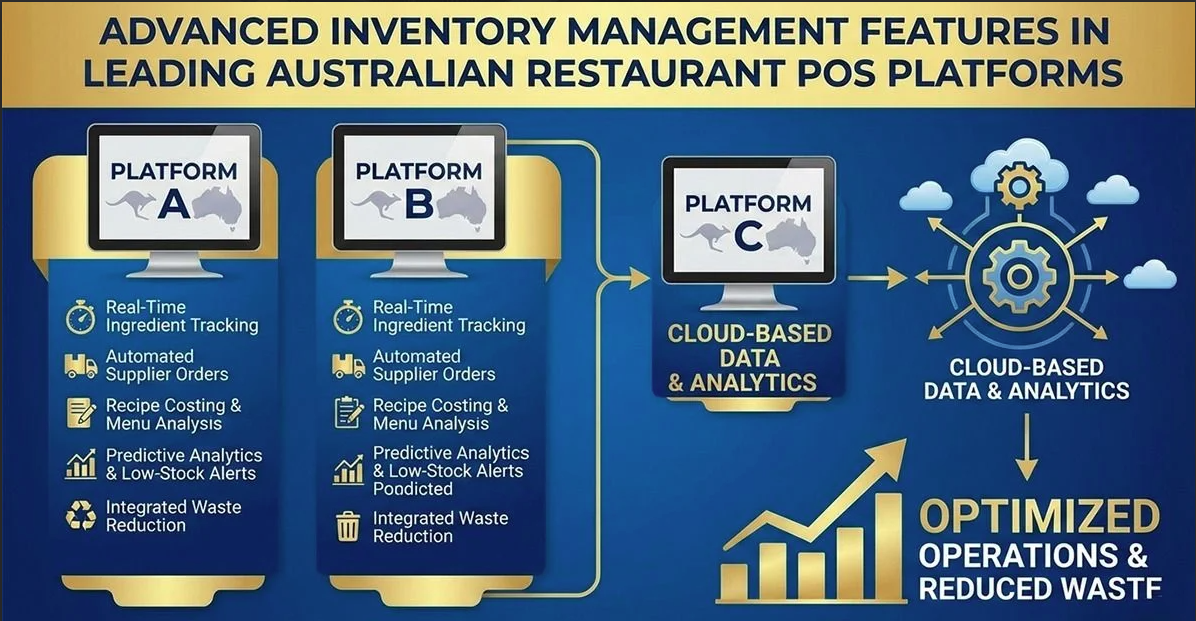
In Australian hospitality, inventory problems rarely announce themselves. They quietly show up as shrinking margins, inconsistent portion sizes, supplier confusion, or unexplained stock gaps at the worst possible time.
For modern restaurants, inventory management is no longer about counting stock — it’s about predicting demand, controlling variance, and reducing waste through intelligent POS-driven systems.
Today’s leading restaurant inventory management software in Australia is redefining how venues understand and control stock at a much deeper level. This article explores the advanced inventory capabilities built into modern restaurant POS platforms — and why they matter more than ever.
Inventory Is No Longer a Back-Office Function
Traditionally, inventory lived outside the POS — spreadsheets, manual counts, and end-of-week reconciliations. That model no longer works.
Modern POS inventory management systems place inventory at the centre of restaurant operations, connecting it directly to:
- Sales activity
- Menu performance
- Staff behaviour
- Supplier efficiency
This shift has transformed inventory from a reactive task into a strategic operational function.
Ingredient-Level Tracking: Seeing Beyond the Menu Item
One of the most significant advancements in restaurant POS inventory features is ingredient-level tracking.
Instead of tracking finished menu items, advanced systems break each dish down into its raw components — proteins, sauces, garnishes, and sides.
This allows restaurants to:
- Monitor actual ingredient usage per sale
- Identify over-portioning issues
- Detect discrepancies between theoretical and actual stock
- Improve recipe consistency
For venues with tight food margins, this level of visibility is game-changing.
Real-Time Inventory Movement, Not End-of-Day Counts
Older systems rely on periodic stock updates. Modern inventory tracking for restaurants happens in real time.
As orders are placed:
- Stock levels update instantly
- Low-stock thresholds trigger alerts
- Menu availability adjusts automatically
This real-time approach helps restaurants avoid overselling, especially during peak periods or across multiple ordering channels.
Automated Stock Adjustments Reduce Human Error
Manual inventory adjustments are one of the biggest sources of inaccuracy. Advanced POS platforms now automate much of this process.
Key automation features include:
- Automatic deductions based on recipes
- Waste logging tied to specific items or shifts
- Stock adjustments linked to refunds or voids
By reducing manual input, restaurants achieve more reliable inventory data with less staff effort.
Inventory Forecasting Based on Sales Intelligence
One of the most powerful but underutilised features in modern restaurant stock management software is predictive inventory forecasting.
Instead of relying on intuition, POS systems analyse:
- Historical sales patterns
- Seasonal demand
- Day-of-week trends
- Promotional impacts
This allows restaurants to forecast ingredient needs more accurately — reducing over-ordering, minimising waste, and improving cash flow.
Variance Reporting That Highlights Operational Leaks
Advanced inventory management POS systems don’t just track stock — they highlight inconsistencies.
Variance reports compare:
- Expected stock usage (based on sales)
- Actual stock levels after counts
This helps identify:
- Theft or misuse
- Inaccurate recipes
- Training issues
- Supplier inconsistencies
Rather than guessing where losses occur, operators gain clear, actionable insights.
Multi-Location Inventory Visibility
For hospitality groups and growing restaurant brands, inventory complexity increases exponentially with each new venue.
Modern hospitality inventory management software in Australia allows operators to:
- Monitor stock across all locations
- Transfer inventory between venues
- Standardise recipes and portion control
- Compare performance location by location
Centralised inventory visibility is essential for scalable growth.
Supplier Integration and Purchase Intelligence
Advanced POS platforms increasingly integrate inventory with purchasing workflows.
This includes:
- Supplier-linked product catalogues
- Purchase order generation based on forecasts
- Delivery variance tracking
- Cost fluctuation monitoring
By connecting suppliers directly to inventory data, restaurants gain better control over pricing and procurement decisions.
Waste Tracking as a Profit Strategy
Waste is no longer treated as an unavoidable cost. Leading food inventory management systems treat waste as a measurable performance metric.
Advanced waste tracking features:
- Log waste by reason (prep error, spoilage, overproduction)
- Tie waste to specific menu items or shifts
- Reveal patterns that can be corrected operationally
Reducing waste by even a small percentage can significantly improve profitability.
Inventory Data as a Decision-Making Tool
When inventory data is accurate and real-time, it becomes a strategic asset.
Restaurants use advanced inventory analytics to:
- Optimise menus
- Adjust pricing strategies
- Improve supplier negotiations
- Refine staffing decisions
This is where inventory analytics for restaurant operations moves from reporting to real business intelligence.
Why Advanced Inventory Features Matter More in Australia
Australian hospitality businesses face:
- High ingredient costs
- Labour shortages
- Strict compliance requirements
- Margin pressure
Advanced POS inventory tools help restaurants operate with precision rather than guesswork — a critical advantage in a competitive market.
Conclusion: Inventory Is the Silent Driver of Profitability
The most successful restaurants don’t just sell well — they control what happens behind the scenes.
Advanced inventory management features in modern restaurant POS platforms give Australian eateries the visibility, control, and intelligence needed to protect margins and scale sustainably.
As POS technology continues to evolve, inventory will remain one of the most important — and most powerful — areas of innovation.