

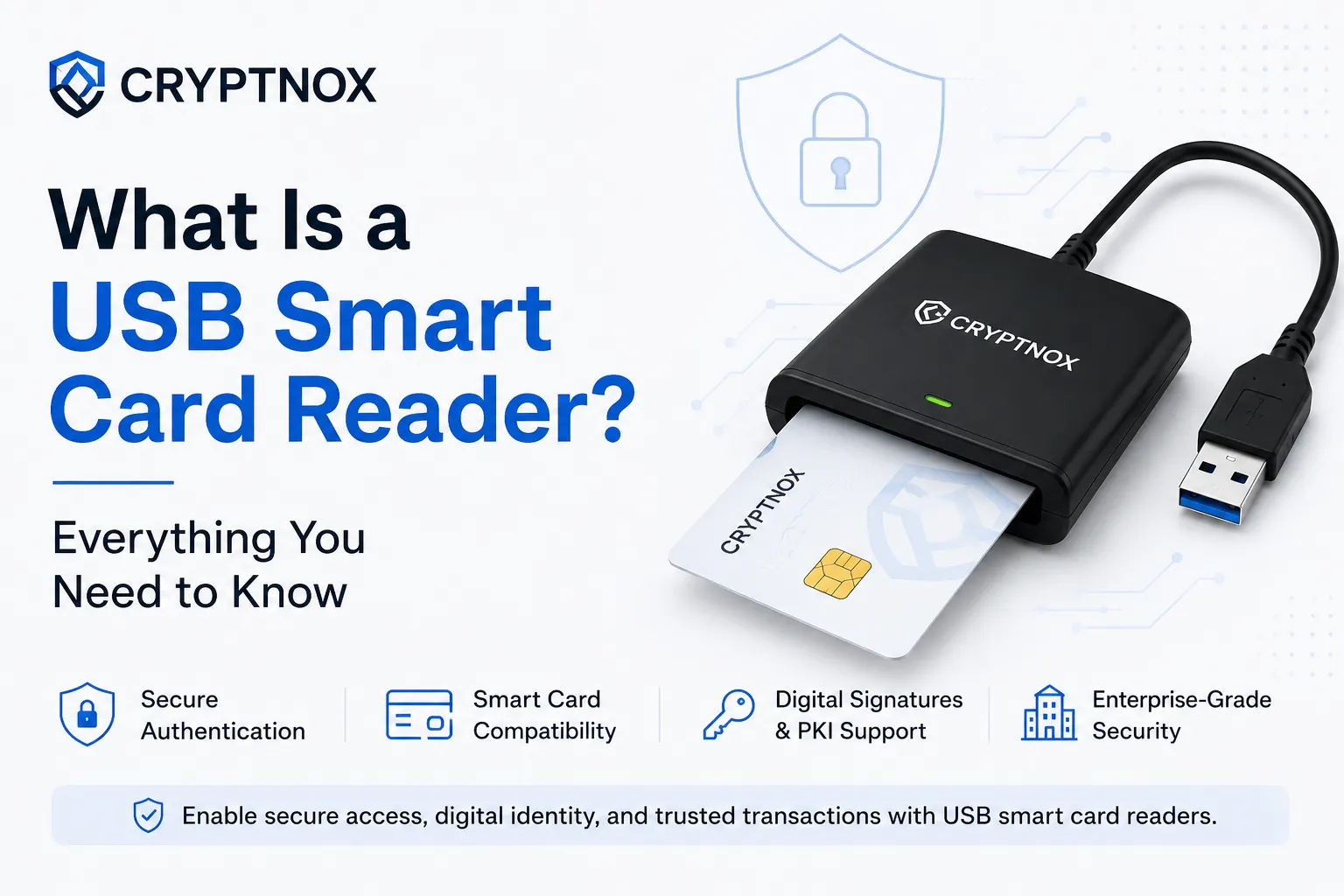
Smart card technology has become a cornerstone of secure authentication, digital identity, and enterprise access control. From government agencies and financial institutions to healthcare providers and cybersecurity teams, organizations rely on smart cards to protect sensitive information and verify user identities. However, smart cards cannot function independently—they require compatible hardware to communicate with computers and applications. This is where a USB smart card reader becomes essential.
A USB smart card reader acts as the bridge between a smart card and a computer, enabling secure authentication, digital signatures, certificate management, and encrypted communication. Whether you’re deploying passwordless authentication or managing secure enterprise credentials, understanding how these devices work can help you choose the right solution for your security infrastructure.
What Is a USB Smart Card Reader?
A USB smart card reader is a hardware device that connects to a computer through a USB interface and enables communication with contact smart cards. It reads information stored securely on the card’s embedded microchip and facilitates cryptographic operations without exposing sensitive credentials.
Unlike magnetic stripe readers, smart card readers interact with microprocessor-based cards capable of performing encryption, authentication, and secure key management.
Organizations use smart card readers for a wide range of applications, including:
-
Passwordless authentication
-
Secure desktop login
-
Digital signatures
-
Public Key Infrastructure (PKI)
-
Government ID verification
-
Enterprise access control
-
Secure certificate management
A reliable Smart card reader ensures these operations remain fast, secure, and compliant with industry standards.
How Does a USB Smart Card Reader Work?
When a smart card is inserted into the reader, the device establishes communication with the card’s secure microcontroller. The operating system and authentication software then exchange encrypted commands with the card to verify identity or authorize requested operations.
Instead of exposing cryptographic keys to the computer, all sensitive operations occur securely within the smart card itself. This significantly reduces the risk of malware or credential theft.
Typical authentication involves:
-
Inserting the smart card
-
Establishing encrypted communication
-
Verifying digital certificates
-
Authenticating the user
-
Granting secure access
This hardware-based approach provides stronger security than software-only authentication methods.
Common Uses of USB Smart Card Readers
Modern organizations deploy smart card readers across many industries because they provide strong identity verification and secure access management.
Some of the most common applications include:
Enterprise Authentication
Companies use smart card readers to secure employee logins, protecting corporate networks from unauthorized access while supporting passwordless authentication initiatives.
Government and Public Sector
Government agencies frequently use smart cards for secure employee identification, digital certificates, and protected access to sensitive systems.
Healthcare
Healthcare providers utilize smart card authentication to secure electronic health records and ensure only authorized personnel access patient information.
Financial Services
Banks and financial institutions use smart cards for secure authentication, digital signatures, and regulatory compliance.
A high-quality USB-C smart card reader provides compatibility with modern devices while supporting these demanding enterprise environments.
Key Features to Look For
Not every smart card reader offers the same capabilities. Selecting the right hardware depends on your intended use case and deployment requirements.
Important features include:
-
USB-C connectivity
-
ISO 7816 compatibility
-
Fast data transmission
-
Driver support for Windows and Linux
-
Secure communication protocols
-
Durable enterprise-grade construction
-
Plug-and-play installation
Organizations deploying large-scale authentication systems should also prioritize compatibility with existing PKI and identity management infrastructure.
Why Hardware-Based Authentication Is More Secure
One of the biggest advantages of smart card authentication is that sensitive credentials remain securely stored inside the smart card instead of on the computer.
This architecture protects against many common cybersecurity threats, including:
-
Credential theft
-
Phishing attacks
-
Malware infections
-
Unauthorized credential duplication
-
Password reuse attacks
Combined with strong cryptographic protocols, hardware authentication creates a highly secure environment for protecting digital identities.
Using a Cryptnox smart card reader enables organizations to leverage these security benefits while maintaining a user-friendly authentication experience.
USB Smart Card Readers and Passwordless Security
The shift toward passwordless authentication is accelerating across enterprise environments. Organizations are increasingly replacing traditional passwords with hardware-based credentials to improve both security and user experience.
Smart card readers play a vital role in this transition by enabling secure authentication without exposing passwords over the network.
Benefits include:
-
Faster login experiences
-
Reduced phishing risks
-
Strong cryptographic verification
-
Compliance with modern security frameworks
-
Improved identity management
As passwordless authentication becomes the industry standard, USB smart card readers continue to grow in importance.
Choosing the Right Smart Card Reader
Selecting the right reader depends on your authentication requirements, operating environment, and hardware ecosystem.
When evaluating available solutions, consider:
-
Operating system compatibility
-
Smart card standards supported
-
USB interface type
-
Enterprise deployment capabilities
-
Driver availability
-
Reliability and build quality
Organizations deploying authentication infrastructure should prioritize readers designed specifically for enterprise security rather than general consumer use.
Future Applications of Smart Card Readers
Smart card technology continues to expand beyond traditional authentication use cases. Emerging applications include:
-
Zero Trust security architectures
-
Digital identity platforms
-
Secure developer authentication
-
Enterprise certificate management
-
Blockchain identity verification
-
Passwordless workforce authentication
As cybersecurity threats continue evolving, hardware authentication devices will remain an essential component of modern identity security.
Conclusion
A USB smart card reader is much more than a simple peripheral. It serves as the secure bridge between physical smart cards and digital authentication systems, enabling encrypted communication, passwordless login, digital signatures, and enterprise identity verification.
Whether supporting government agencies, financial institutions, healthcare providers, or enterprise IT environments, a USB smart card reader provides the secure hardware foundation needed for modern authentication. Solutions like the Cryptnox smart card reader combine enterprise-grade reliability, strong compatibility, and secure communication to help organizations build resilient authentication infrastructures prepared for the future of digital security.