

Meta Description: Understand the heat treatment processes for stainless steel sheets. Learn about solution annealing, stress relieving, carbide precipitation prevention, and post-heat treatment chemical passivation.
Target Keywords: heat treatment stainless steel sheet, solution annealing stainless steel, stress relief stainless steel, carbide precipitation, stainless steel passivation ASTM A967
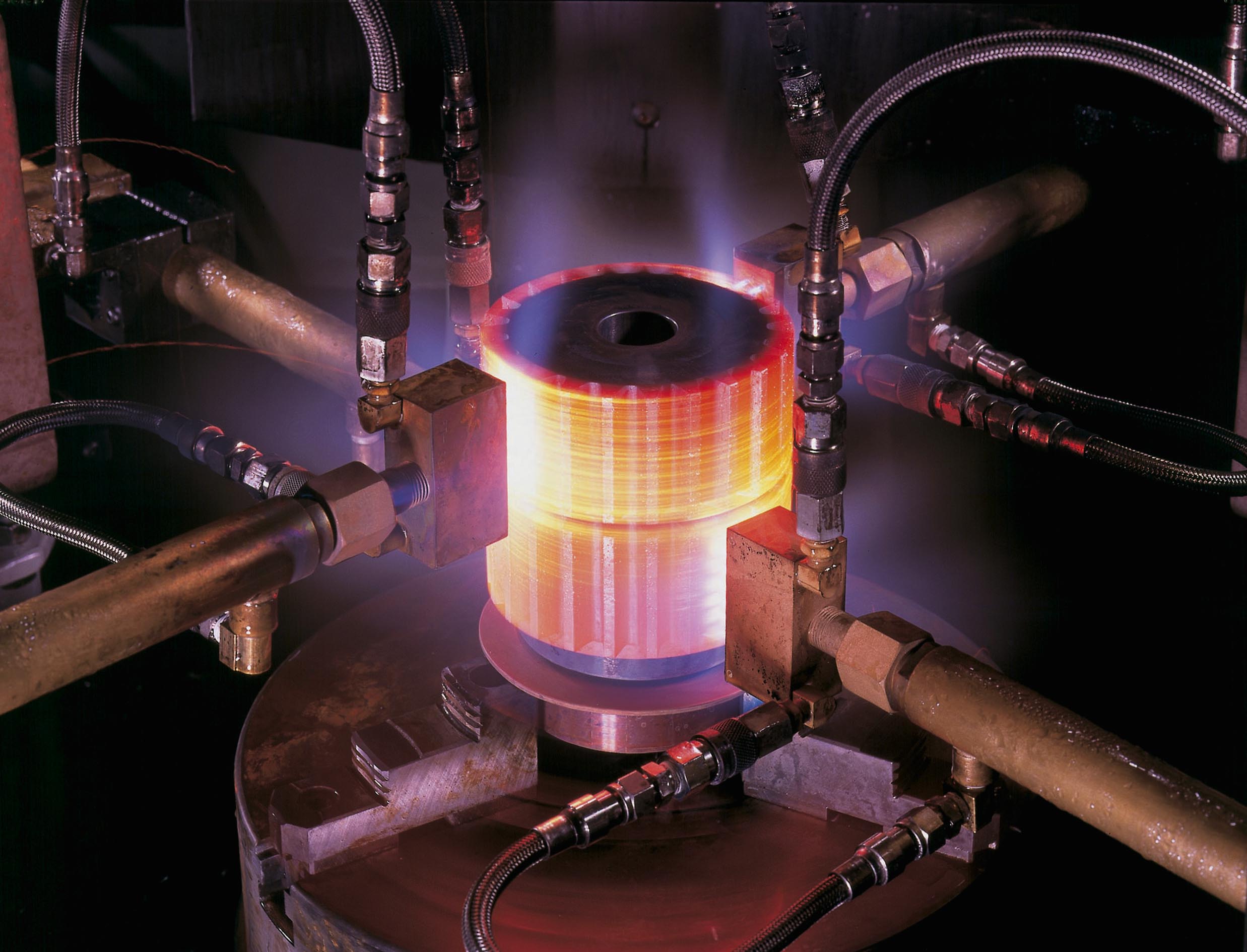
Heat treatment plays a crucial role in modifying the mechanical, physical, and metallurgical properties of stainless steel sheets. Whether restoring ductility after severe cold working, relieving internal stresses after heavy welding, or optimizing structural integrity for cryogenic performance, thermal processing must be strictly controlled to prevent phase degradation and corrosion risks.
Understanding the specific temperature regimes and cooling dynamics required for austenitic, ferritic, and martensitic stainless steel sheets ensures optimal material reliability.
1. Solution Annealing (Austenitic Grades: 300 Series)
For austenitic stainless steel sheets (such as 304, 304L, 316, and 316L), conventional hardening via heat treatment is impossible because they lack a phase transformation upon heating. Instead, heat treatment is used to soften the material and restore corrosion resistance through Solution Annealing.
Process Parameters:
-
Temperature Range: $1010^circtext{C} text{ to } 1150^circtext{C}$
-
Soaking Time: Typically $1 text{ to } 2 text{ minutes}$ per millimeter of sheet thickness.
-
Cooling Method: Rapid water quenching or high-velocity forced air cooling.
$$text{Chromium Carbides } (text{Cr}_{23}text{C}_6) xrightarrow{text{Heated to } >1010^circtext{C}} text{Dissolved Chromium & Carbon Matrix} xrightarrow{text{Rapid Quench}} text{Retained Austenitic Solution}$$
Objectives & Metallurgical Mechanisms:
-
Dissolution of Chromium Carbides: Re-dissolves chromium carbide precipitates that form along grain boundaries during welding or hot working back into the solid austenitic matrix.
-
Elimination of Strain-Induced Martensite: Converts hard, brittle martensite formed during cold rolling or deep drawing back into ductile, soft austenite.
-
Prevention of Sensitization: Rapid cooling through the critical temperature zone ($450^circtext{C} text{ to } 850^circtext{C}$) is mandatory. Slow cooling allows chromium carbides to re-precipitate at grain boundaries, depleting adjacent areas of chromium and causing intergranular corrosion.
2. Stress Relieving Thermal Cycles
Cold forming, shearing, laser cutting, and welding introduce high residual tensile stresses into stainless steel sheets. If left unaddressed, these internal stresses can lead to Stress Corrosion Cracking (SCC) in chloride environments or cause dimensional warping during post-machining.
|
Stress Relief Method |
Temperature Range |
Cooling Rate |
Primary Application & Effect |
|
Full Stress Relief |
$850^circtext{C} text{ to } 900^circtext{C}$ |
Rapid Quench |
Removes up to $90%$ of residual stress; requires rapid cooling to avoid carbide precipitation in non-L grades. |
|
Low-Temperature Relief |
$300^circtext{C} text{ to } 400^circtext{C}$ |
Air Cool |
Reduces peak residual stresses by $20%text{–}40%$ without risking carbide precipitation or scale formation. |
|
Stabilization Anneal |
$870^circtext{C} text{ to } 900^circtext{C}$ |
Air Cool |
Applied specifically to titanium/niobium stabilized grades (e.g., 321, 347) to preferentially form titanium/niobium carbides over chromium carbides. |
3. Sub-Critical Annealing (Ferritic Grades: 400 Series)
Ferritic stainless steel sheets (such as 409, 430, and 446) contain higher chromium concentrations with little to no nickel. Unlike austenitic grades, they do not undergo structural phase shifts at elevated temperatures, but they are prone to rapid grain growth at temperatures above $950^circtext{C}$, which leads to embrittlement.
-
Process Temperature: $750^circtext{C} text{ to } 850^circtext{C}$
-
Cooling: Air cooling or furnace cooling.
-
Objective: Relieves internal strains and recrystallizes the ferrite grains without inducing excessive grain growth or sigma-phase embrittlement.
4. Furnace Atmosphere & Atmosphere Control
Heating stainless steel sheets in standard atmospheric air causes heavy high-temperature oxidation, forming a thick, dark chromium-iron scale that must be removed through aggressive acid pickling ($text{HNO}_3 + text{HF}$).
To achieve a clean, bright surface directly out of the furnace (known as Bright Annealing), thermal cycles are executed under controlled, non-oxidizing atmospheres:
-
Dry Hydrogen ($text{H}_2$): A pure hydrogen atmosphere acts as a strong reducing agent, removing surface oxides and leaving a mirror-bright surface finish.
-
Dissociated Ammonia / Cracked Ammonia ($75% text{H}_2 + 25% text{N}_2$): A cost-effective alternative to pure hydrogen, though dew point control ($< -50^circtext{C}$) is critical to prevent surface nitriding or oxidation.
-
Vacuum Furnaces: Ideal for high-spec aerospace or medical sheets, completely eliminating gas-metal reactions.
5. Post-Heat Treatment Chemical Passivation
Heat treatment disturbs the natural passive oxide layer ($text{Cr}_2text{O}_3$) of stainless steel sheets. After thermal processing and mechanical scale removal, sheets must undergo chemical passivation according to standards such as ASTM A967 or AMS 2700.
$$text{Bare Metal Surface} + text{Nitric/Citric Acid Bath} xrightarrow{text{Free-Iron Removal}} text{Enriched Chromium Surface} xrightarrow{text{Air Exposure}} text{Passive Film } (text{Cr}_2text{O}_3)$$
Passivation Methods:
-
Nitric Acid Passivation: $20%text{–}50% text{HNO}_3$ solution at $20^circtext{C} text{ to } 50^circtext{C}$ for $30 text{ minutes}$. Provides strong oxidation but requires strict environmental controls.
-
Citric Acid Passivation: $4%text{–}10%$ environmentally safe citric acid formulations. Selectively dissolves free iron off the surface without stripping heavy alloying elements, leaving an enriched chromium-to-iron ratio.
Summary: Thermal processing of stainless steel sheets requires strict temperature management and rapid cooling rates to avoid carbide precipitation and intergranular corrosion. Utilizing controlled furnace atmospheres ensures bright finishes, while post-treatment chemical passivation restores the chromium oxide film required for maximum corrosion protection.