

Load development does not follow the concept of ‘Guesswork’; it is purely built on data. From powder selection to powder charge adjustment, powder brand to cartridge overall length – every decision needs a proper understanding of how pressure and velocity work within safe limits. That is the reason why, before establishing a single round, reloaders spend hours studying tested data to maintain precision, consistency, and safety. This is where structured load data, such as Hodgdon reloading data, is widely used in the shooting community. Reloaders depend on these structured load data to have the tested charge ranges, pressure limit, and secure performance benchmark, and to make informed decisions before assembling ammunition.
Be it a goal of accuracy, consistency, or cost-cutting, reloaders rely on structured load data to build safe and consistent loads that perform predictably across various conditions. So, if you are a reloader and new to ammunition building, this article will guide you in your reloading journey, definitely.
What Structured Reloading Data Includes
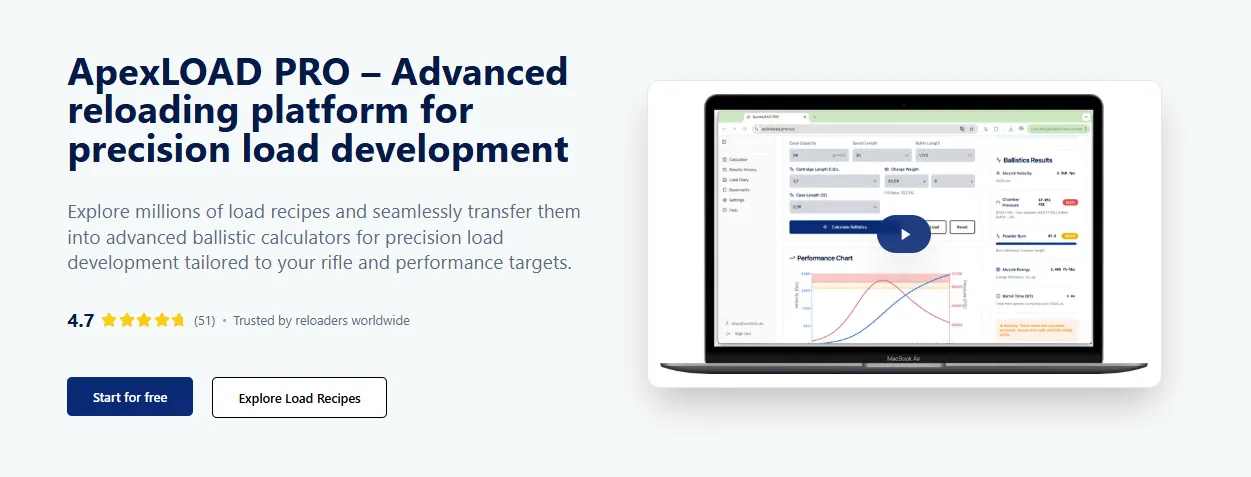
Whether it is a professional reloader, a professional shooter, or a hobbyist, accessing load data in reliable platforms is safe and performs well. Platforms like ApexLOAD PRO can be taken as one of the best references to access structured load data. Load data that is designed through controlled testing and assured to provide load recipes without trial and error.
Tested load data always defines the safe operating parameters required for specific component combinations. Such load data recipes include,
- The powder charge and powder range (the minimum and maximum limits)
- Bullet type and weight
- Cartridge type and specification
- Expected velocity
- Safe pressure thresholds
By accessing these components, reloaders can easily understand how the variables in a data recipe work, and they can also avoid unsafe and untested combinations while aiming to achieve consistent performance.
Using Load Data as a Starting Baseline
In the practical world of reloading, data is not treated as the final answer. Rather, the load data is used as a baseline or a starting framework. Reloaders start with the minimum suggested powder charge and range, and they gradually increase it to observe the pressure signs and performance to stay in the safe zone.
These observations help them to achieve the safest reloading recipe and stay within a safe pressure limit. Also, reloaders can understand how the changes in velocity and powder charge adjustment bring changes in performance.
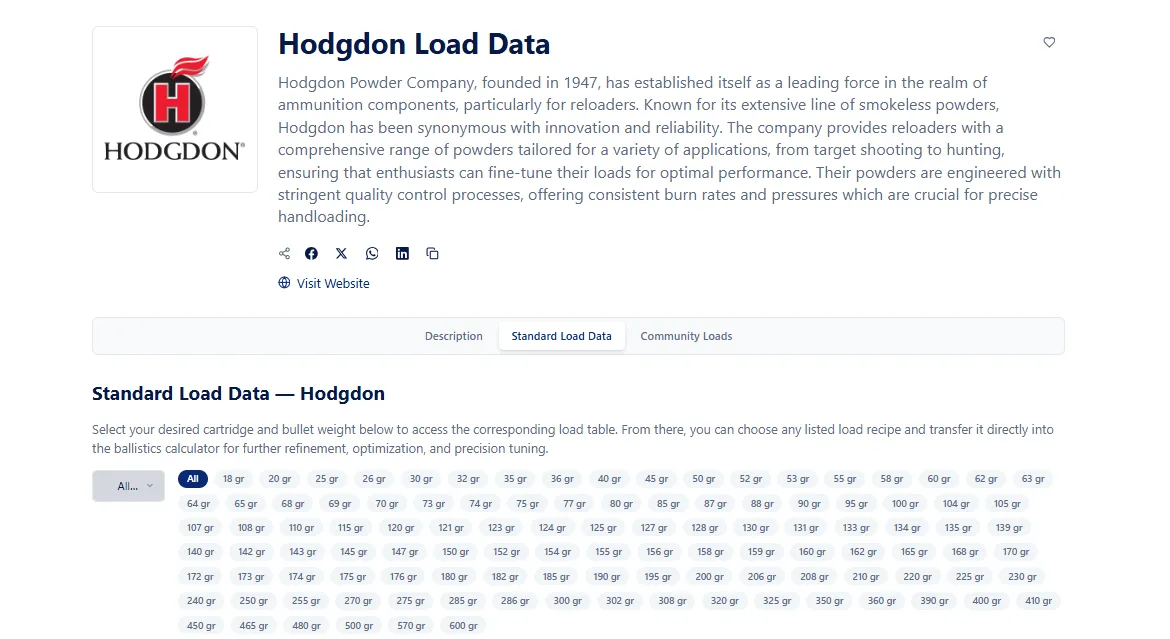
They can easily identify the stable load recipes and repeat the load combination for the best and safest rounds. Structured load data references, like Hodgdon reloading data, help reloaders find these initial yet essential parameters and provide tested models by sorting among a wide range of powders and cartridges.
Understanding Powder Charge and Burn Rate
Powder charge and burn rate are the two most critical elements in any load recipe. These two factors work together and influence the pressure build rate and velocity. While the powder charge (weight) determines how much the amount of energy will be generated, the burn rate determines how quickly the energy will be released.
If a load recipe is designed with a faster-burning powder, it will build pressure quickly and function within lower charge ranges. On the other hand, while a load recipe is built with slow-rate burning powder, it will release energy more gradually and often require higher charge weights.
This is why reloaders must study structured reloading data recipes to better understand how these two factors interact and affect their performance. Thus, different data recipe references, including Hodgdon reloading data, are widely used by the reloader community to compare how different powders perform across similar charge ranges (minimum and maximum loads) and bullet weights.
Making Informed Powder Selection Decisions
In load development, choosing the right powder is one of the most crucial steps for making an informed decision. Accessing the multiple powder options for the same cartridge becomes essential for reloaders to have the final and safe combination. Key elements reloaders consider before deciding the right powder for their load recipes are,
- Flexibility of the powder charge range
- The burn rate features
- Expected velocity
- Performance consistency in various conditions
In short, there is no room for assumption in ammunition development. Thus, reloaders place the greatest importance on the structured load data to compare these factors and make informed decisions. Structured load data recipes available in platforms like ApexLOAD PRO downsize uncertainty and ensure that the selected powder range and burn rate align with both performance and safety goals.
Adapting Load Data to Practical Reloading Conditions
The load data recipes are built under controlled testing conditions, but actual performance can vary under practical reloading conditions.
Factors which can influence the result are,
- barrel length
- seating depth
- case capability
- firearm attributes
This is why experienced reloaders consider reloading data as a baseline. They modify the powder charge and burn rate gradually while abiding within safe limits. They use load data as a guide rather than a stringent recipe.
Load Data Improves Efficiency and Provides Consistency for Modern Reloaders
Printed manuals and scripts of load data recipes are a good source to collect load data recipes, and there is no contradiction. However, modern reloaders increasingly rely on digital tools for efficient workflow. They find online platforms more organized, accessible, and efficient for load data comparison. With online structured load data recipes, reloaders can
- Discover relevant powder and cartridge combinations and component alternatives quickly.
- Effortlessly compare multiple load options in a single place
- Focus more on refining loads and save time on searching for information
In reloading, consistency in performance is the key objective for reloaders, whether experienced or new in the shooting community. Once a structured load recipe is designed, reloaders can reproduce the same performance across multiple batches by maintaining a compatible powder charge, predictable velocity, and a safe and stable pressure level.
To Conclude,
Reloading ammunition is a guided process backed by data, precision, and meticulous adjustments of combinations of components. Whether it is to select powders or refine performance, every step requires a deep understanding of how components behave under standardized situations.
Structured data references, including Hodgdon reloading data, provide a trustworthy base for safe and consistent load development. At the same time, digital platforms like ApexLOAD PRO guide reloaders with data accessibility, making it easier to compare options and refine loads for performances tied to goals and consistency.