

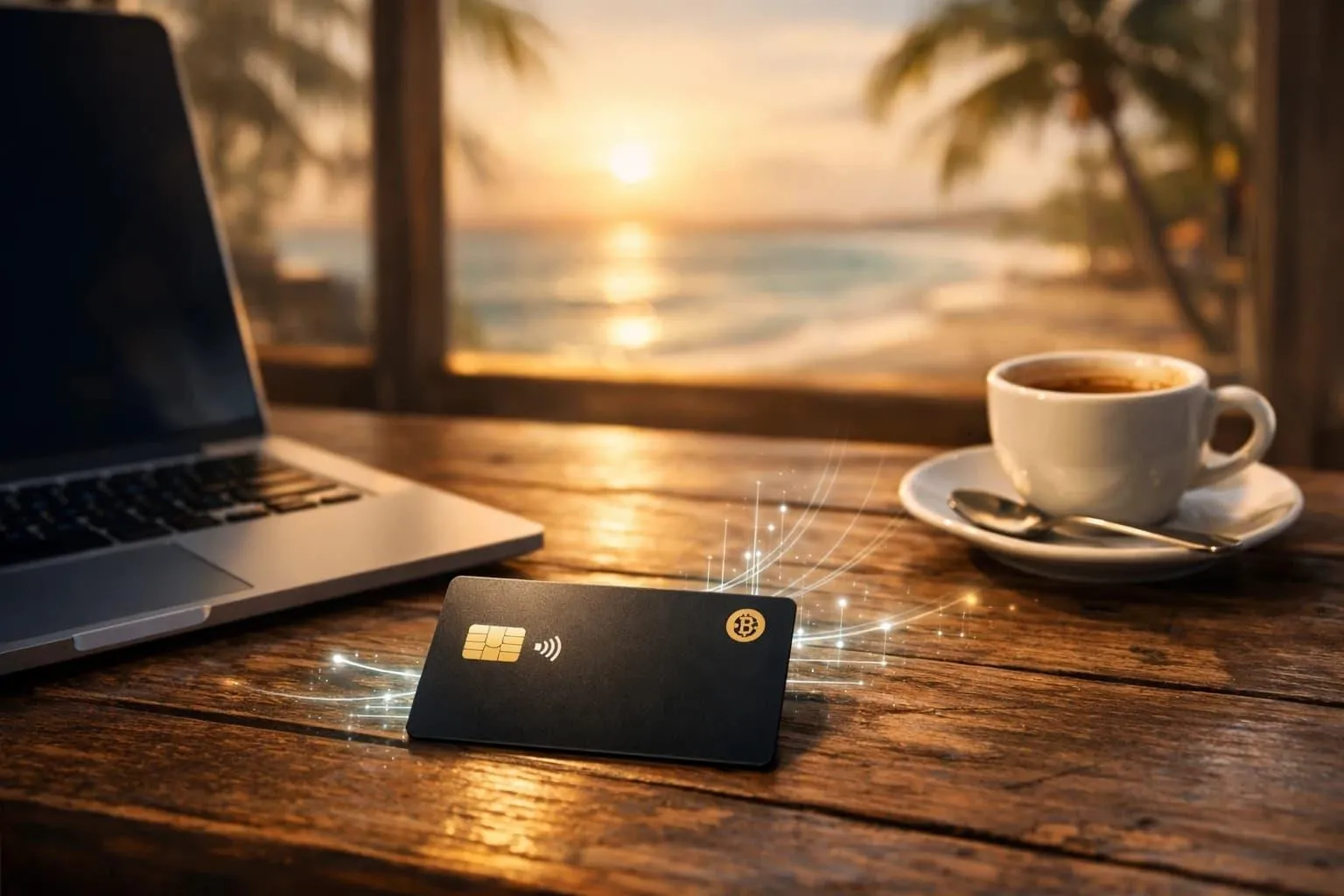
The rise of remote work has created a new generation of professionals who can work from anywhere. These digital nomads move between countries, manage international payments, and rely heavily on digital financial tools. However, traditional banking systems often struggle to keep up with the needs of a globally mobile lifestyle.
This is where crypto-powered payment solutions are making a significant impact. From a crypto debit card for everyday spending to a Web3 hardware wallet for secure asset management, digital nomads are increasingly adopting blockchain-based financial tools to achieve true borderless living.
The Financial Challenges of a Digital Nomad Lifestyle
Living and working across multiple countries comes with unique financial hurdles:
-
High international transaction fees
-
Currency conversion costs
-
Delayed cross-border transfers
-
Limited banking access in certain regions
-
Security risks while traveling
-
Difficulty managing multiple currencies and assets
Traditional financial institutions were designed around geographic boundaries, but modern remote workers need financial solutions that move as freely as they do.
Why Crypto Is Becoming a Popular Choice
Cryptocurrencies provide a decentralized alternative that allows users to send, receive, and store value globally without relying entirely on traditional banking infrastructure.
For digital nomads, crypto offers:
-
Faster international transactions
-
Reduced dependency on local banks
-
Access to global financial networks
-
Greater control over personal funds
-
Multi-currency flexibility
However, securely managing digital assets remains essential. This is where hardware-based solutions play a critical role.
The Role of a Web3 Hardware Wallet
A Web3 hardware wallet enables users to securely store private keys offline, reducing exposure to online threats such as hacking, phishing, and malware.
Unlike software wallets that remain connected to internet-enabled devices, hardware wallets provide an additional layer of protection by isolating sensitive credentials.
Benefits include:
-
Offline private key storage
-
Enhanced transaction security
-
Protection against phishing attacks
-
Secure access to decentralized applications (dApps)
-
Long-term asset protection
For frequent travelers using public Wi-Fi networks and shared workspaces, this extra level of security is especially valuable.
How a Crypto Debit Card Simplifies Everyday Spending
While cryptocurrencies are useful for storing and transferring value, everyday purchases still require practical spending solutions.
A crypto debit card bridges the gap between digital assets and real-world transactions by allowing users to spend cryptocurrency at merchants that accept traditional card payments.
Common use cases include:
-
Paying for accommodation
-
Booking flights
-
Dining and entertainment
-
Coworking memberships
-
Transportation expenses
-
Online subscriptions
This convenience makes crypto more practical for digital nomads who need seamless access to their funds while traveling internationally.
Why Self-Custody Matters for Global Travelers
Many digital nomads prefer maintaining direct control over their assets rather than relying solely on centralized exchanges.
A self-custodial wallet card ensures that users retain ownership of their private keys and digital assets at all times.
Unlike custodial platforms where a third party manages funds on behalf of users, self-custody provides:
-
Complete control over digital assets
-
Reduced counterparty risk
-
Greater privacy
-
Direct access to Web3 ecosystems
-
Independence from banking restrictions
For individuals living across multiple jurisdictions, maintaining control over personal finances can be a major advantage.
The Rise of the Crypto Smartcard
One of the most innovative developments in the crypto industry is the crypto smartcard.
A crypto smartcard combines the portability of a traditional payment card with the security of hardware wallet technology. Instead of carrying separate hardware devices, users can securely manage their crypto assets using a compact card-sized solution.
Key advantages include:
Enhanced Portability
Digital nomads often prioritize lightweight and travel-friendly technology. A smartcard easily fits into a wallet while maintaining strong security features.
Improved Security
Sensitive cryptographic operations occur within the card’s secure chip, reducing exposure to online attacks.
Convenient Authentication
Many crypto smartcards support NFC or smartcard readers, enabling secure transaction signing and authentication.
Multi-Purpose Functionality
Some solutions combine crypto storage, identity verification, and Web3 authentication into a single device.
Hardware Wallet Cards: Security Meets Convenience
The demand for a hardware wallet card continues to grow among remote workers, freelancers, and crypto enthusiasts.
Traditional hardware wallets provide excellent security but can sometimes be bulky for frequent travelers. Hardware wallet cards offer a more portable alternative without compromising core security principles.
Benefits include:
-
Credit-card-sized design
-
Secure element chip protection
-
Offline private key storage
-
Easy backup and recovery options
-
Web3 and DeFi compatibility
-
Travel-friendly portability
For digital nomads managing assets across different countries, a hardware wallet card offers a practical balance between security and convenience.
Borderless Payments and Financial Freedom
One of the biggest advantages of crypto-based payment solutions is the ability to participate in a truly global economy.
Digital nomads can:
-
Receive freelance payments from international clients
-
Hold multiple digital assets
-
Avoid excessive foreign exchange fees
-
Transfer funds across borders quickly
-
Access decentralized financial services
-
Maintain financial flexibility while traveling
As remote work continues to expand worldwide, borderless payment solutions are becoming increasingly important for location-independent professionals.
Security Best Practices for Digital Nomads Using Crypto Cards
To maximize security while traveling, users should:
Keep Recovery Phrases Offline
Never store recovery phrases in cloud storage or unsecured digital notes.
Use Hardware-Based Security
A Web3 hardware wallet or hardware wallet card significantly reduces online attack exposure.
Enable Multi-Factor Authentication
Protect exchange accounts and financial services with strong authentication methods.
Verify Transactions Carefully
Always confirm wallet addresses and transaction details before approving transfers.
Avoid Public Network Risks
Use secure connections and VPN services when managing financial accounts while traveling.
The Future of Borderless Living
The combination of remote work, decentralized finance, and secure hardware-based payment solutions is reshaping how people interact with money globally.
As adoption grows, tools such as crypto debit cards, self-custodial wallet cards, crypto smartcards, and hardware wallet cards are becoming essential components of the modern digital nomad toolkit.
These technologies provide greater financial independence, stronger security, and seamless access to digital assets—allowing professionals to work, travel, and transact without being limited by traditional banking boundaries.
Conclusion
Digital nomads require financial solutions that are as mobile as their lifestyles. A crypto debit card makes everyday spending easier, while a Web3 hardware wallet and self-custodial wallet card provide secure ownership and control over digital assets. Meanwhile, crypto smartcards and hardware wallet cards offer a convenient way to combine portability with robust security.
As borderless living becomes more common, crypto-powered payment and storage solutions are helping remote professionals manage their finances with greater freedom, flexibility, and confidence—no matter where in the world they choose to work.