
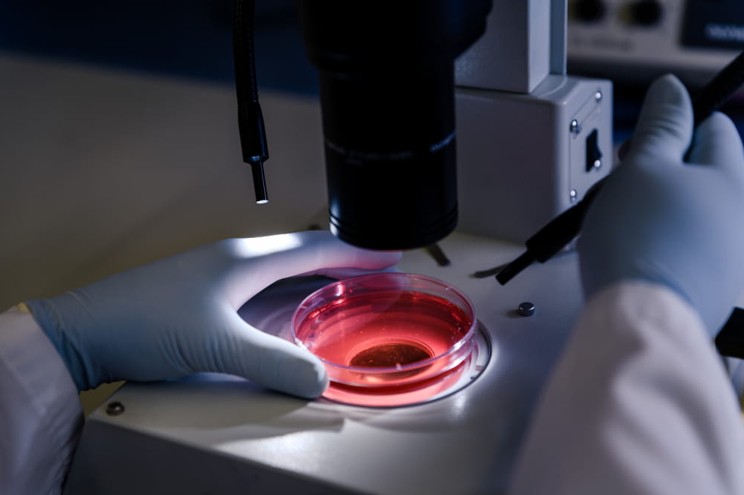

Walk into a modern biology lab and you might hear a soft hum from a machine that looks almost unassuming. But inside that machine, something remarkable is happening. Thousands of cells are being analyzed in seconds, each one revealing tiny pieces of information that help scientists understand diseases, treatments, and even the human immune system. That quiet process is called cell cytometry, and it’s far more fascinating than it sounds at first.
What Is Cell Cytometry, Really?
At its core, cell cytometry is about measuring and analyzing cells. It allows researchers to look at individual cells and understand their physical and chemical characteristics. The most common form is flow cytometry. In this method, cells are suspended in a fluid and passed through a laser beam one by one. As light interacts with each cell, detectors capture signals that reveal details like size, complexity, and the presence of specific markers.
It might sound technical, but the idea is simple. Instead of looking at a bulk sample and guessing what’s inside, cytometry lets scientists examine each cell individually. That level of detail changes everything.
Why It Matters More Than You Think
Cell cytometry is not just a lab technique. It plays a critical role in real-world healthcare and research. Doctors use it to diagnose diseases like leukemia and lymphoma. Researchers rely on it to study how the immune system responds to infections or vaccines. Pharmaceutical companies use it to test how new drugs interact with cells.
I came across Roots Analysis, and they mentioned that this market is “The global cell cytometry market size, valued at USD 1.99 billion in 2025, is projected to reach USD 2.18 billion in 2026 and USD 5.27 billion by 2035, representing a CAGR of 10.3% during the forecast period 2026 to 2035.” That steady growth reflects how essential this technology has become across multiple fields.
A Closer Look at How It Works
Once you understand the process, it starts to feel almost elegant. Cells are first labeled with fluorescent markers. These markers bind to specific proteins or structures within the cell. When the cells pass through the laser, the markers light up, and detectors capture that information.
Each signal corresponds to a particular feature. By combining these signals, scientists can build a detailed profile of each cell. It’s a bit like scanning barcodes at a supermarket, except instead of prices, you’re reading biological information. And instead of a few items, you’re analyzing thousands of cells in moments.
Where Science Meets Real-Life Impact
One of the most compelling aspects of cell cytometry is how directly it connects to patient care. In cancer treatment, for example, cytometry helps identify abnormal cells and track how they respond to therapy. In immunology, it helps researchers understand how different cell types behave during infections.
During vaccine development, cytometry can show whether immune cells are responding as expected. That kind of insight is incredibly valuable when time is critical. It’s not an exaggeration to say that many modern medical breakthroughs rely, at least in part, on this technology.
Learning Curve Behind the Scenes
Despite its power, cell cytometry is not plug-and-play. There’s a learning curve that doesn’t always get talked about. Preparing samples requires care. Labeling cells correctly is crucial. Even small mistakes can affect results. Then comes data analysis, which can be surprisingly complex.
A researcher once described it as “easy to run, hard to master.” That line sticks because it captures the reality perfectly. The machine can process cells quickly, but interpreting the data takes skill and experience.
Technology Is Pushing Boundaries
Cell cytometry has come a long way from its early days. Modern systems can analyze multiple parameters at once, sometimes more than a dozen or even dozens. There’s also imaging cytometry, which combines traditional measurement with visual data. This allows scientists to not only measure cells but also see them in detail.
Automation and software improvements are making workflows smoother. Data analysis tools are becoming more intuitive, which helps researchers focus on insights rather than just processing information. Still, the human element remains essential. Technology can assist, but it doesn’t replace scientific judgment.
Challenges That Keep It Grounded
Like any advanced tool, cell cytometry has its limitations.
-
Cost: High-end instruments can be expensive.
-
Data complexity: Large datasets require careful interpretation.
-
Standardization issues: Results can vary depending on protocols.
There’s also the challenge of keeping up with rapid advancements. New techniques and tools are constantly emerging, which can be both exciting and overwhelming.
A Field That Keeps Evolving
What makes cell cytometry so interesting is that it never really stands still. As biology becomes more complex, the tools used to study it evolve as well.
Researchers are now exploring ways to integrate cytometry with other technologies like genomics and proteomics. This creates a more complete picture of cellular behavior. It’s a reminder that science is rarely about a single method. It’s about combining approaches to get closer to the truth.
Final Thoughts
Cell cytometry might not be a household term, but its impact is undeniable. From diagnosing diseases to advancing research, it plays a quiet but powerful role in modern science.
What stands out is the balance it strikes. It’s highly technical, yet deeply practical. It relies on advanced machinery yet still depends on human insight. And maybe that’s what makes it so compelling. It shows how far we’ve come in understanding life at the smallest level, while also reminding us that there’s always more to learn.

