

How Pro UI Design Shapes Mobile App Usability

Key Takeaways
-
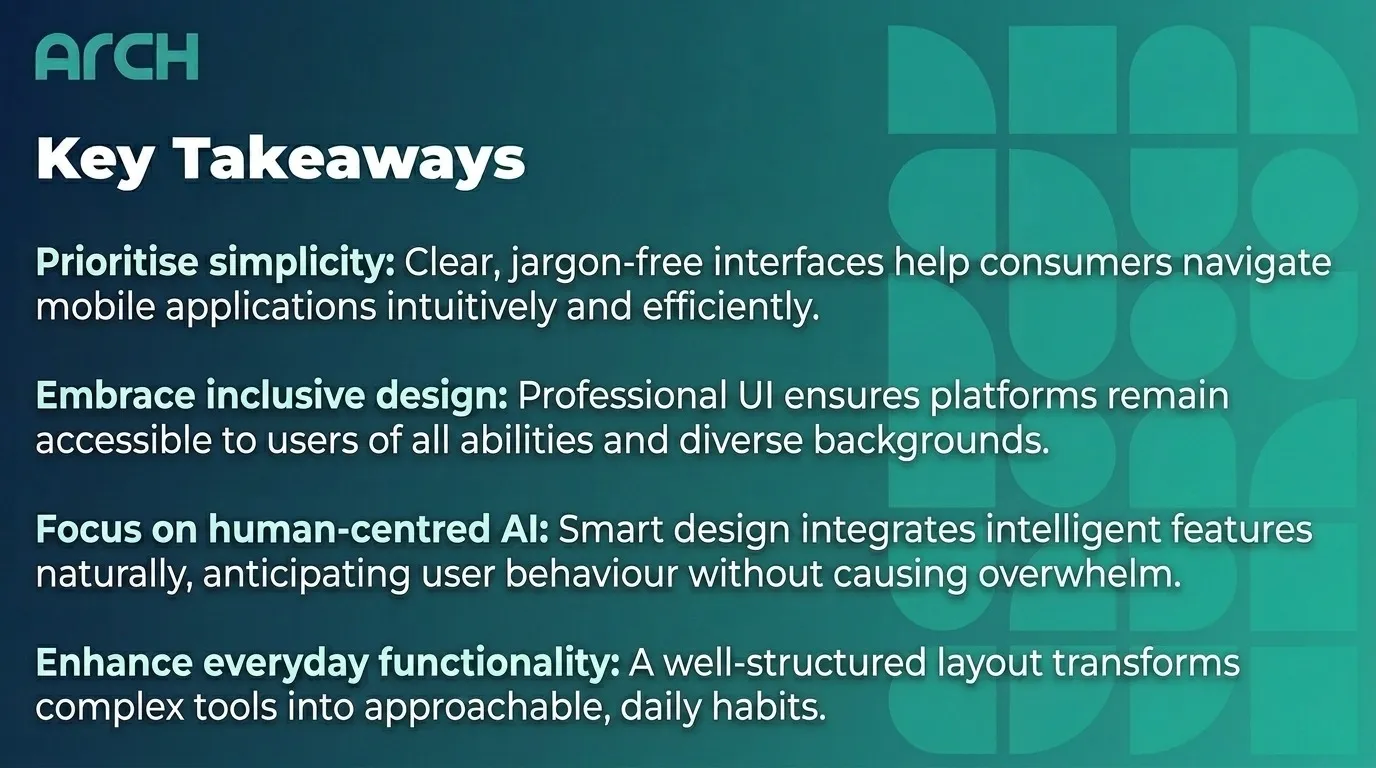
Prioritise simplicity: Clear, jargon-free interfaces help consumers navigate mobile applications intuitively and efficiently.
-
Embrace inclusive design: Professional UI ensures platforms remain accessible to users of all abilities and diverse backgrounds.
-
Focus on human-centred AI: Smart design integrates intelligent features naturally, anticipating user behaviour without causing overwhelm.
-
Enhance everyday functionality: A well-structured layout transforms complex tools into approachable, daily habits.
The Power of Professional Interface Design
Every day, millions of people rely on mobile applications to manage their finances, connect with friends, and organise their lives. However, the difference between an application that feels like a chore and one that becomes an indispensable tool often lies beneath the surface. This defining factor is professional user interface (UI) design.
When teams prioritise a clean and intuitive interface, they create truly impactful digital products. The goal is not merely to make a platform look visually appealing, but to construct a seamless bridge between complex software and the everyday consumer. By removing friction, professional design empowers users to achieve their goals with confidence and ease.
Bridging the Gap Between Users and Technology
The most successful digital platforms feel like a natural extension of the user’s thought process. Rather than forcing individuals to learn a new digital language, professional UI design adapts to natural human behaviour. This collaborative approach to problem-solving ensures that consumers feel guided rather than confused.
To achieve this level of clarity, design teams must focus heavily on layout, typography, and colour hierarchy. When important buttons stand out and navigation menus remain logical, people can move through the application effortlessly. The underlying technology might be incredibly complex, but the consumer experience remains perfectly straightforward.
This strict focus on usability transforms casual downloaders into loyal, long-term advocates. By treating the consumer as a valued partner in the digital journey, brands can cultivate lasting trust. Ultimately, when an application functions smoothly day after day, it becomes a reliable companion in the user’s daily routine.
Enhancing Accessibility for Everyone
Building a truly successful application means ensuring that no user is left behind. Accessibility in digital design is not simply a compliance checkbox; it is a fundamental pillar of impactful digital products. Features such as high-contrast viewing modes, legible text scaling, and voice navigation make a profound difference to a diverse consumer base.
Partnering with an experienced app design and development company is crucial for getting these nuanced details right. These experts understand how to weave inclusive features into the very fabric of the application, ensuring that accessibility never feels like an afterthought. They test rigorously to guarantee the application works seamlessly across different devices and user requirements.
Through thoughtful and inclusive choices, brands can build applications that welcome absolutely everyone. Whether integrating human-centred AI to read text aloud or simplifying touch targets for easier navigation, these professional touches matter. The result is a much more equitable digital landscape where functional technology is available to all.
Driving Functionality Through Simplicity
Functionality should never come at the expense of visual clarity. Modern consumers are consistently inundated with choices, and applications cluttered with unnecessary features are often quickly abandoned. Professional UI design focuses on highlighting core actions and stripping away distractions, allowing users to focus on what truly matters.
By embracing minimalism, designers actively help consumers process information much faster. Clear visual hierarchies ensure that the most important tools are always just a single tap away, whilst secondary features sit neatly out of sight until needed. This careful organisation prevents cognitive overload and encourages continued, daily engagement.
When every single element on the screen serves a distinct, logical purpose, the entire platform performs better. Users spend considerably less time searching for settings and more time enjoying the application’s core benefits. In the end, simplicity is the ultimate driver of lasting functional success in the mobile market.
Conclusion
Professional user interface design is the invisible force that makes digital tools genuinely indispensable. By blending aesthetic appeal with a highly logical structure, designers turn complex software into approachable, everyday solutions. It is exactly this careful balance that defines the modern mobile experience.
As technology continues to integrate further into daily life, the demand for accessible and highly functional platforms will only grow. Brands that invest heavily in professional design today are actively building the trusted tools of tomorrow. Ultimately, great design places the human experience at the very centre of digital innovation.
Frequently Asked Questions
How does UI design affect mobile app accessibility? Professional UI design incorporates inclusive elements like high-contrast colours, readable typography, and screen-reader compatibility. These thoughtful additions ensure that applications remain fully usable for individuals with varying visual, motor, or cognitive abilities.
Why is simplicity so important in modern application design? Simplicity drastically reduces cognitive load, meaning users do not have to think too hard to navigate the platform. A clean interface highlights core functions, making the application much easier to learn and far more enjoyable to use on a daily basis.
What role does human-centred AI play in UI design? Human-centred AI anticipates user needs and adapts the interface to smoothly suit individual habits. This creates a deeply personalised experience that feels supportive and intuitive, without overwhelming the consumer with overly technical jargon or complex menus.